TwoO’Clock
Two dyes
Soganila uses two dyes and nothing else: soga, the brown of a bark, and nila, the blue of a leaf.
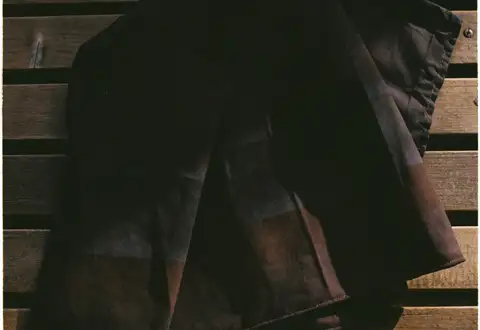
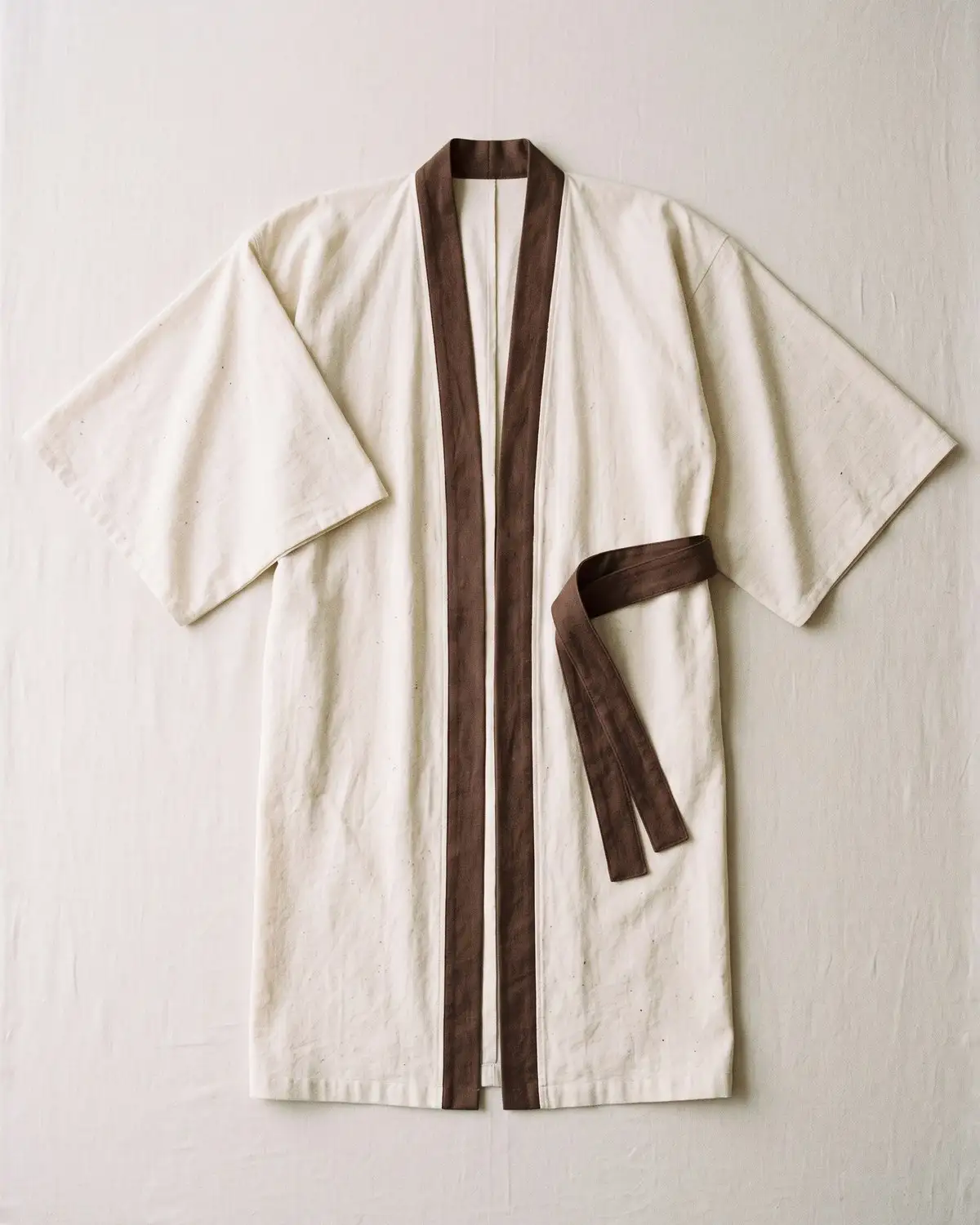
Undyed, our cloth is the colour of rice paper. Dipped in one, it turns brown or blue. Dipped in both, it turns almost black. Every piece in the collection sits somewhere on that line — so does every colour on this page.
Read about the atelierThe dye line
Four colours, one recipe each. Choose a dye to see what is made in it.
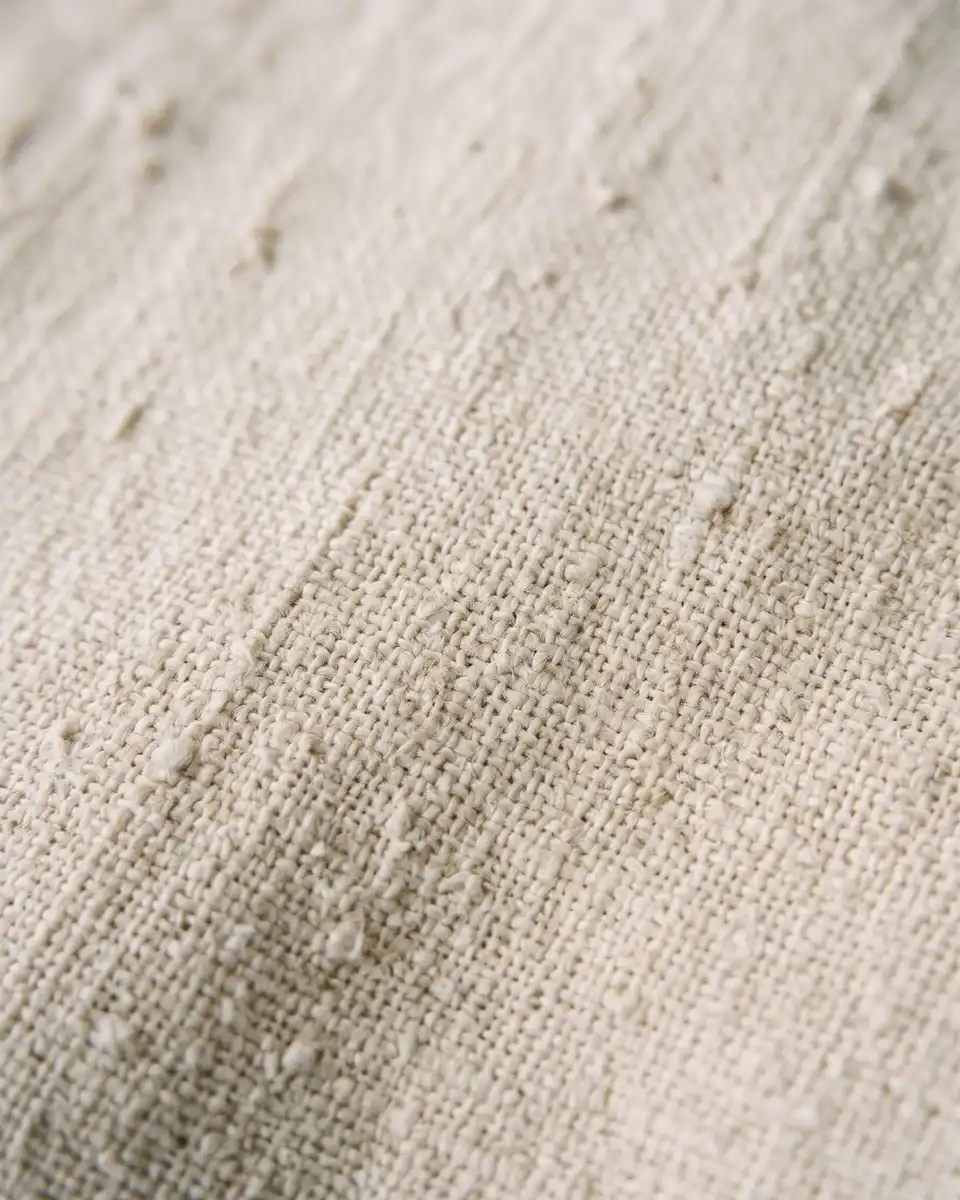 UndyedBelacu
The cloth as it leaves the loom: the colour of rice paper and raw cotton.
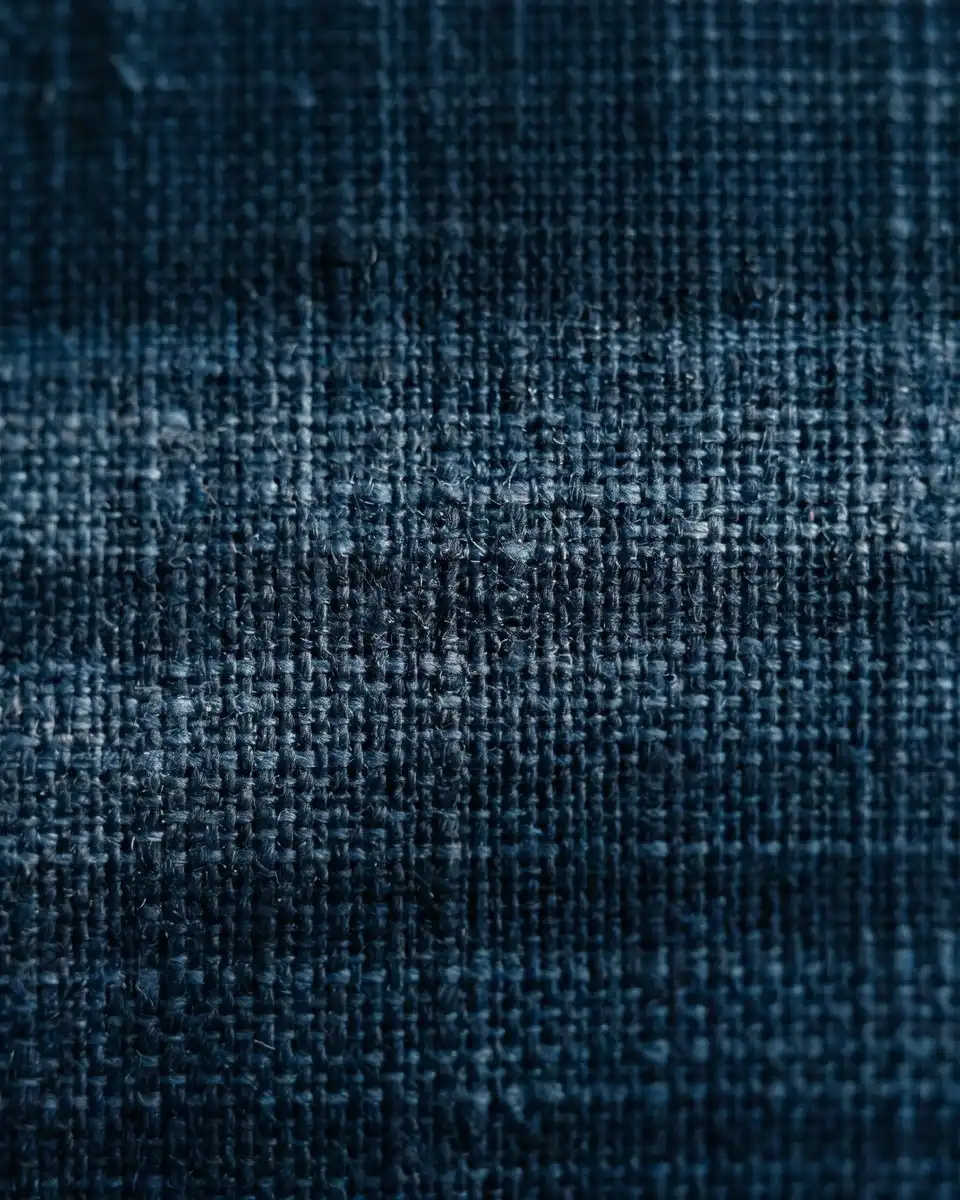 Indigo, 12–16 dipsNila
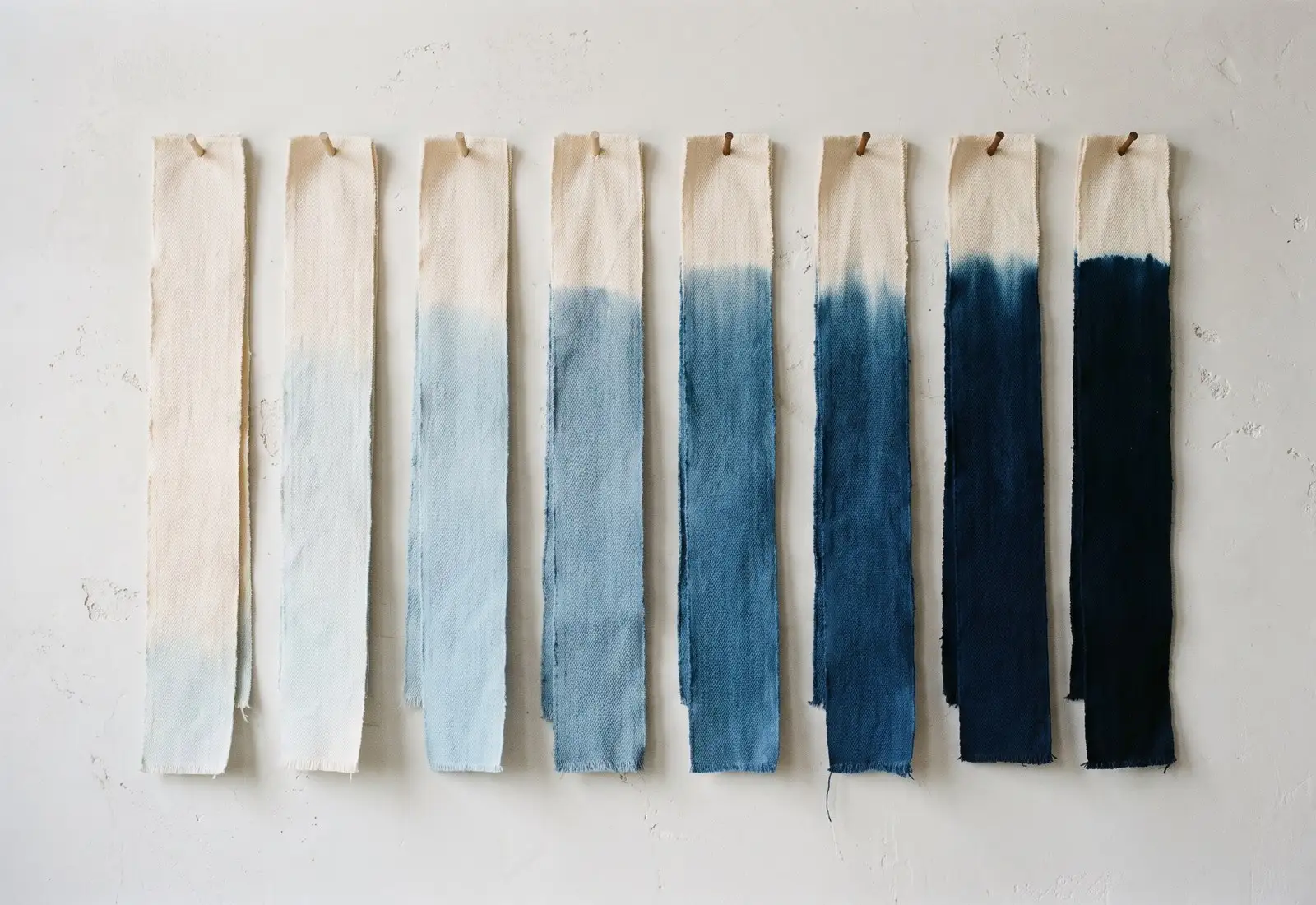
Tarum leaf fermented in lime. Each dip is a shade; the blue is built, not poured.
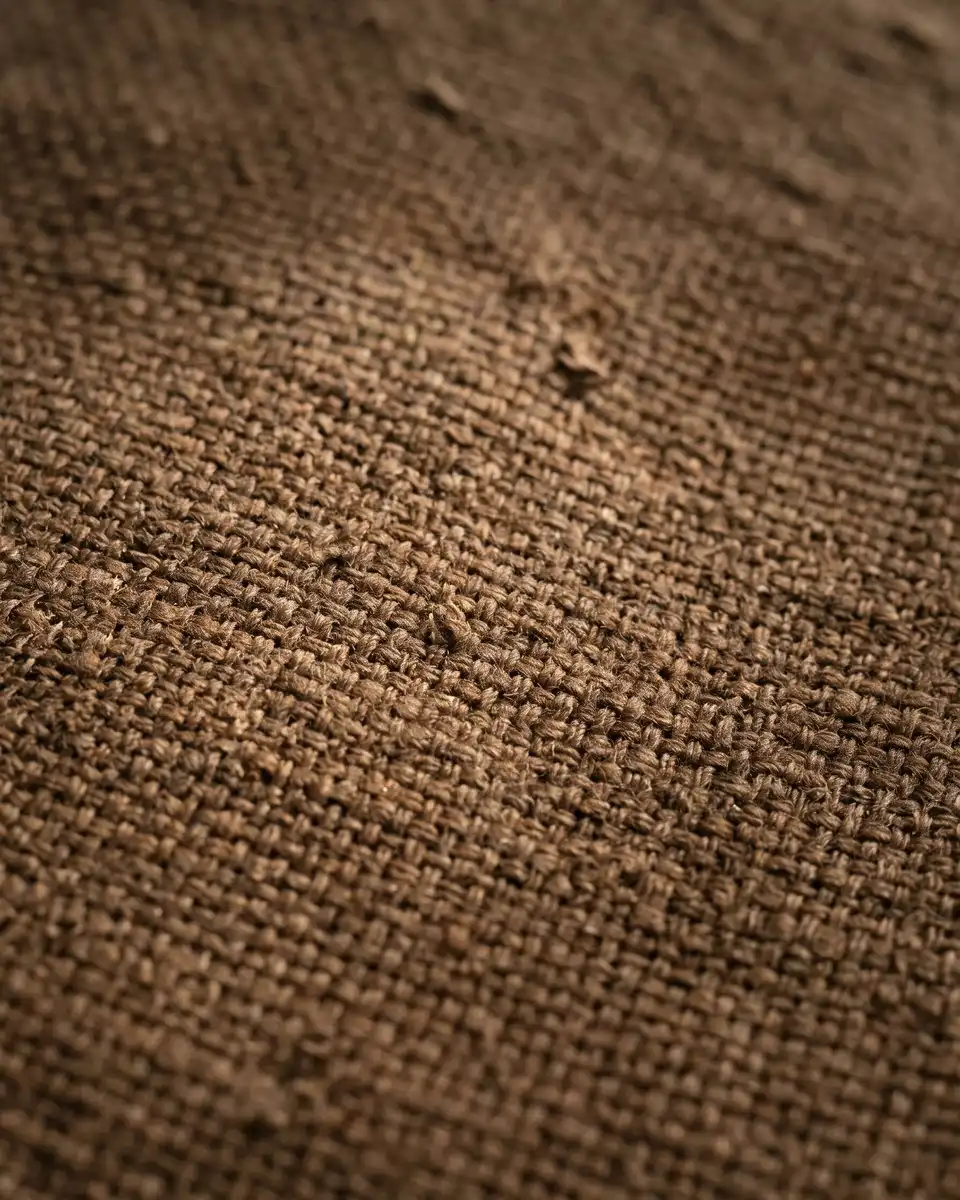 Soga bark, 21 daysSoga
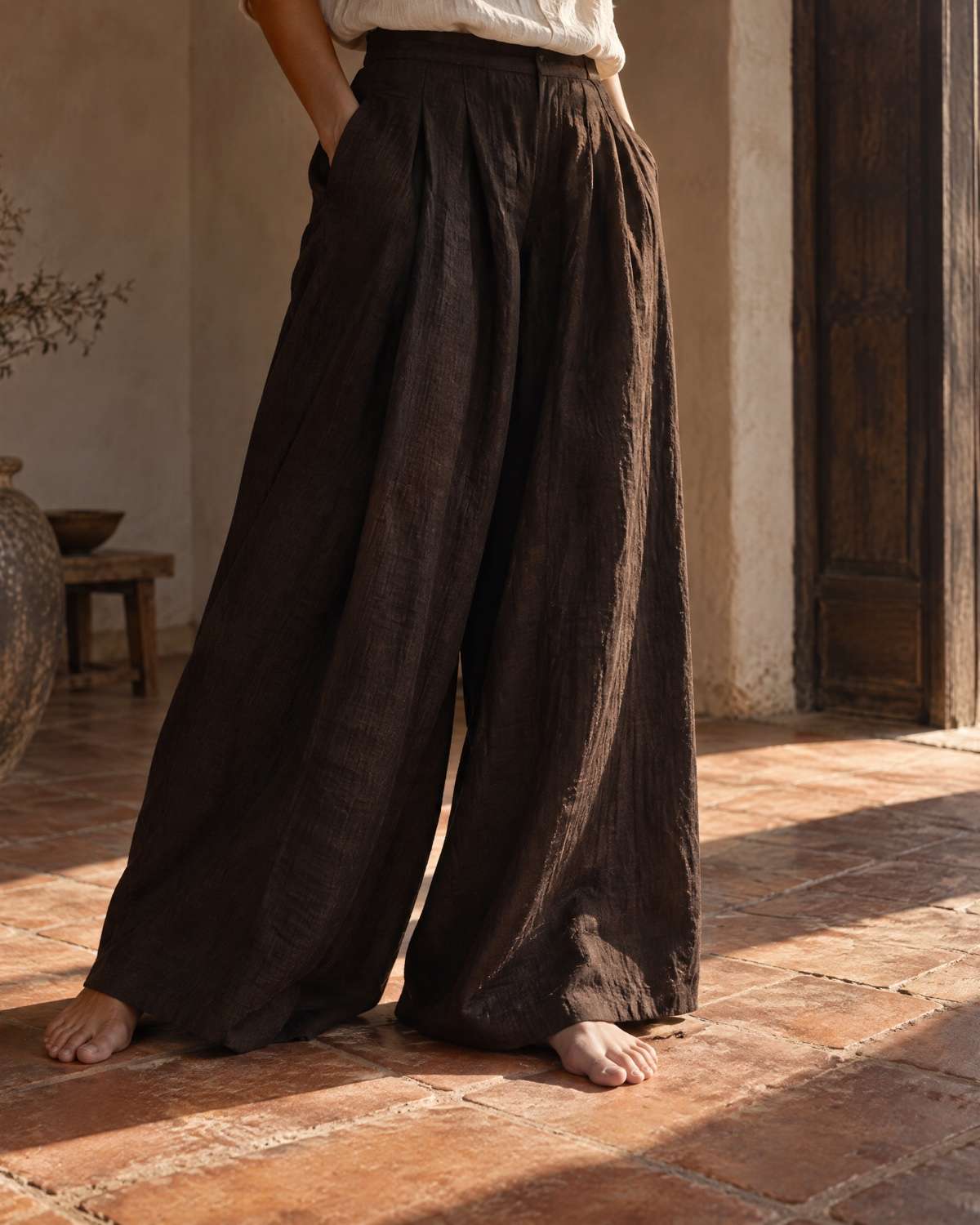
Bark of the soga tree, simmered and laid on over three weeks of dry-season sun.
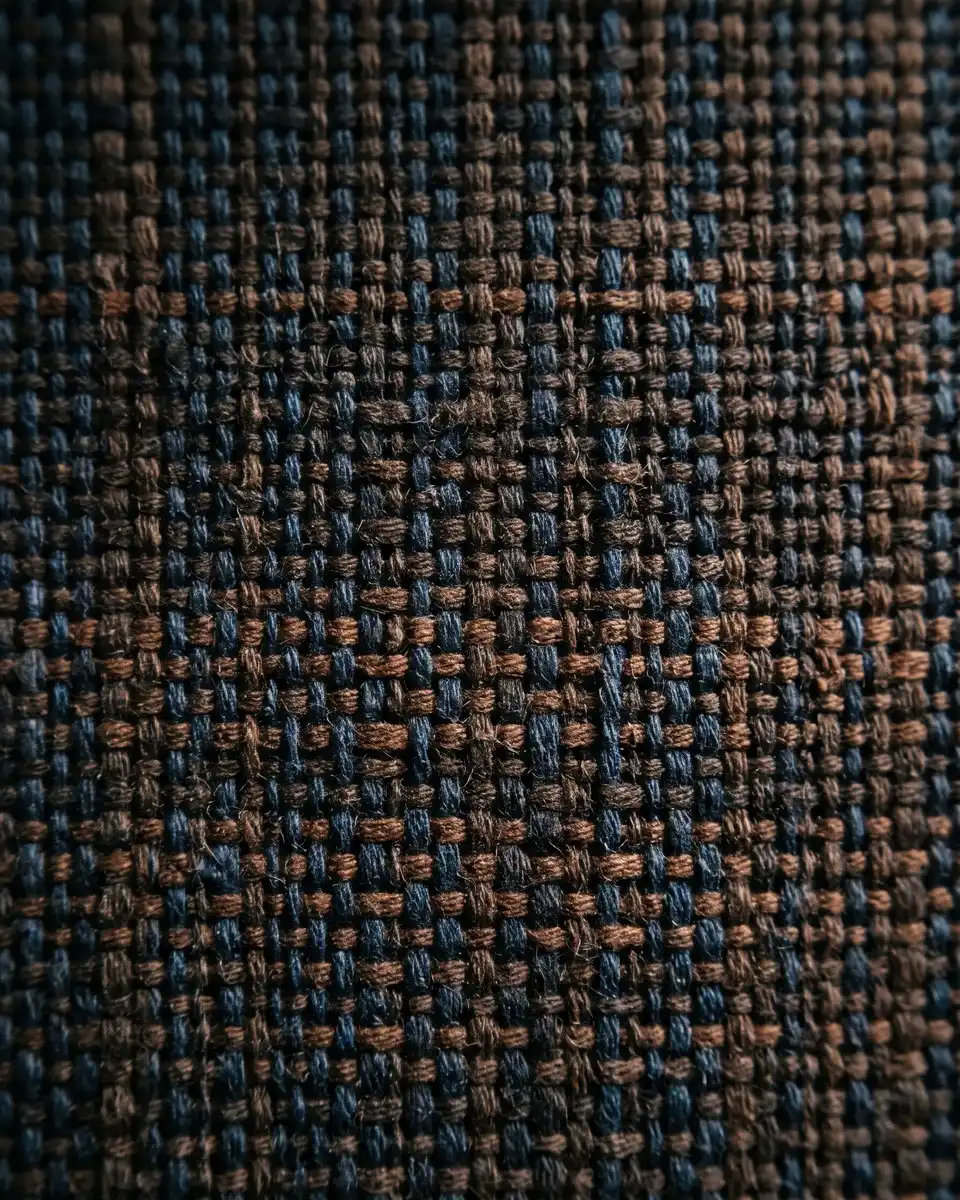 Nila, then sogaWedel
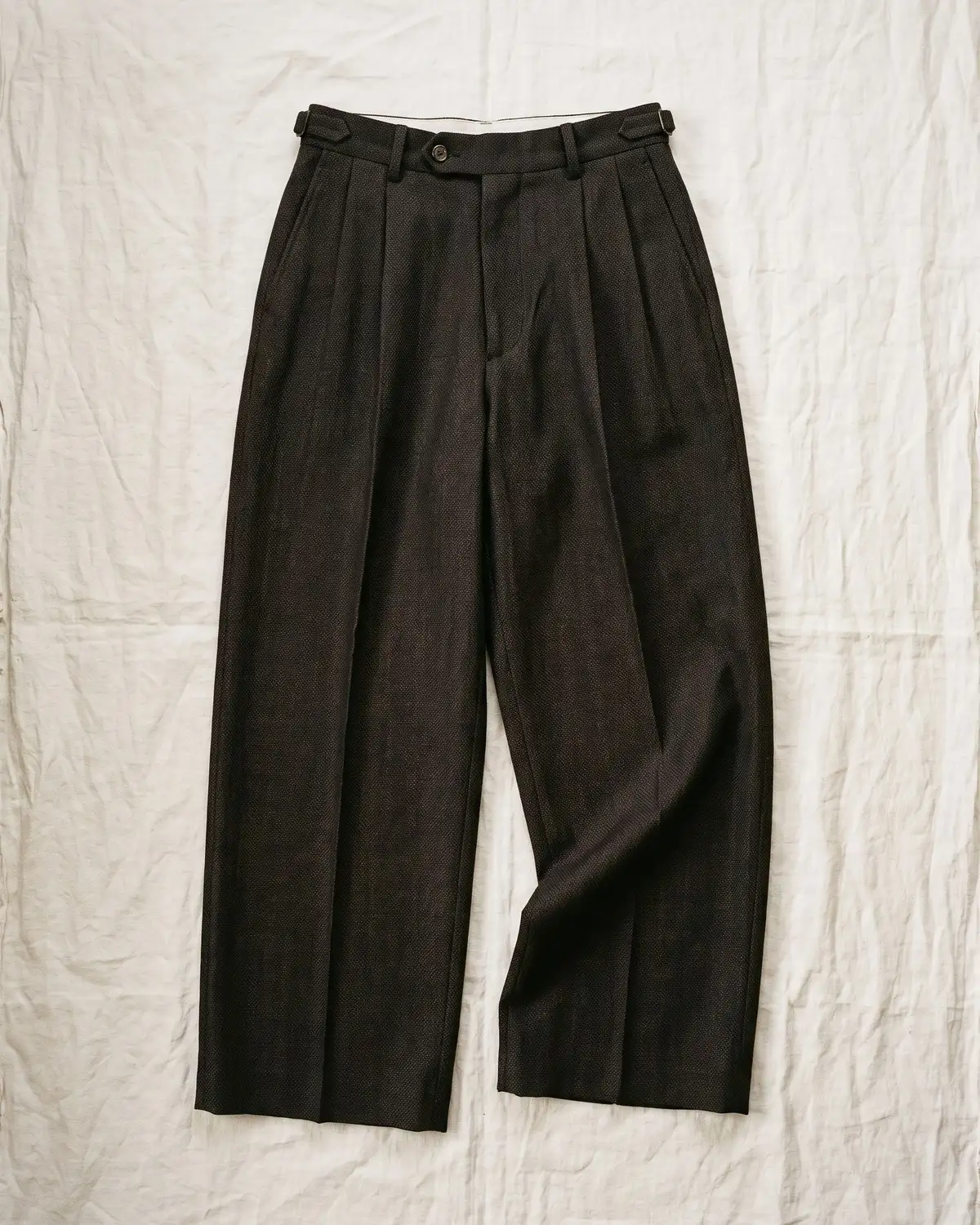
Indigo first, soga over it. The two cancel into a brown-black that shifts in daylight.
Collection 01
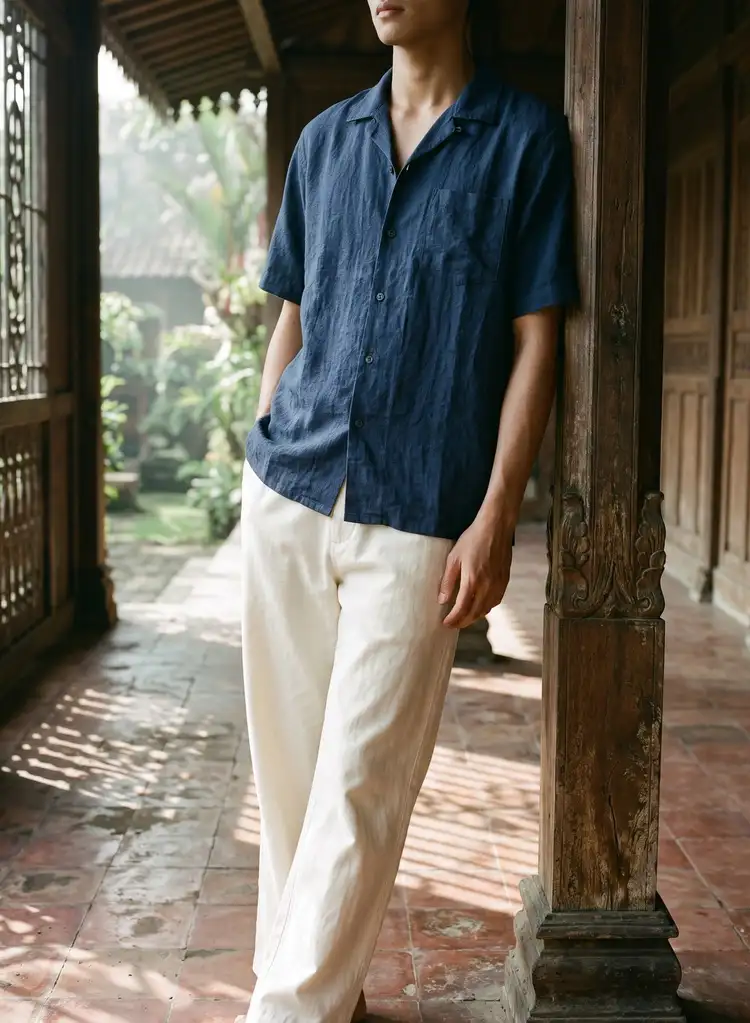
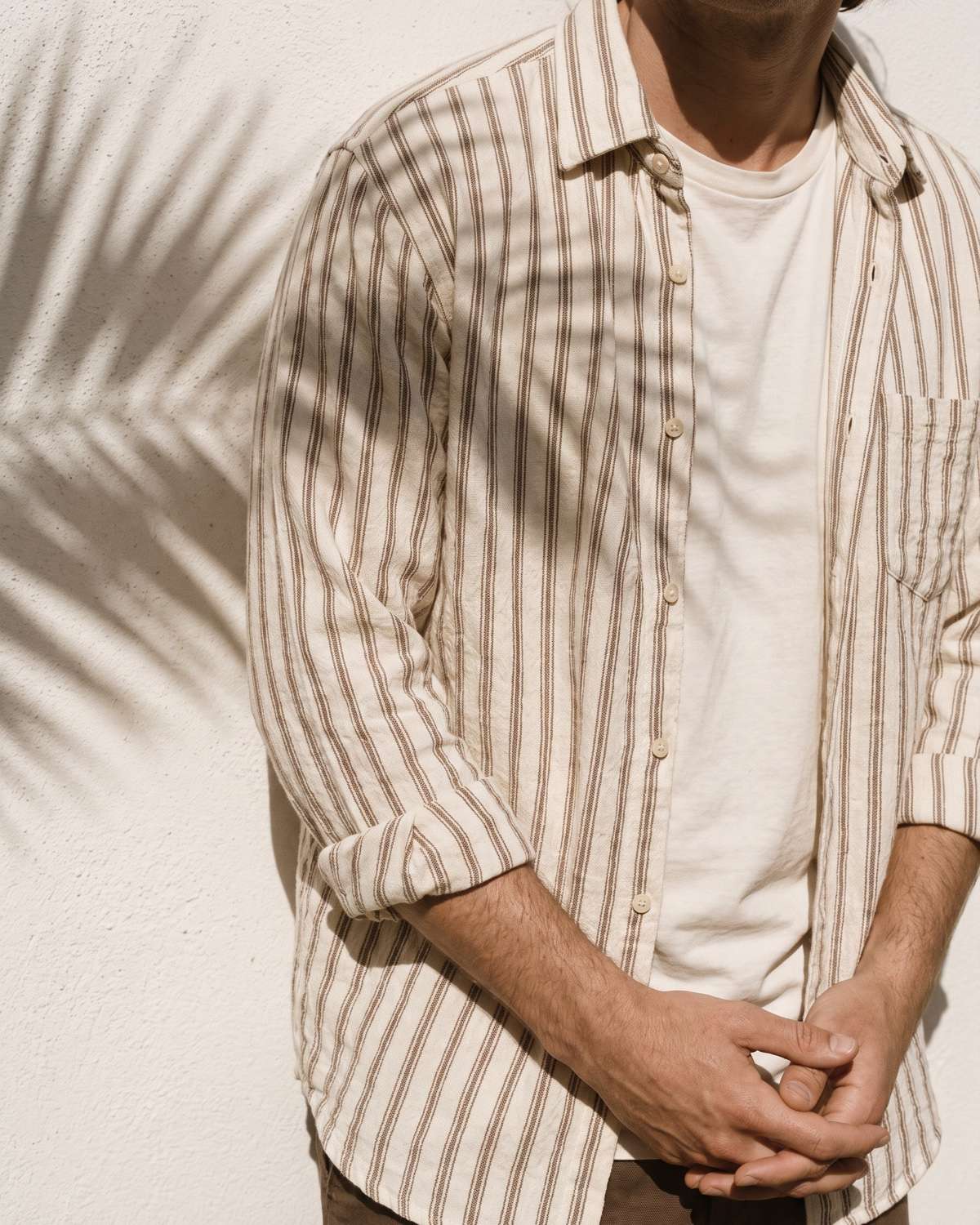
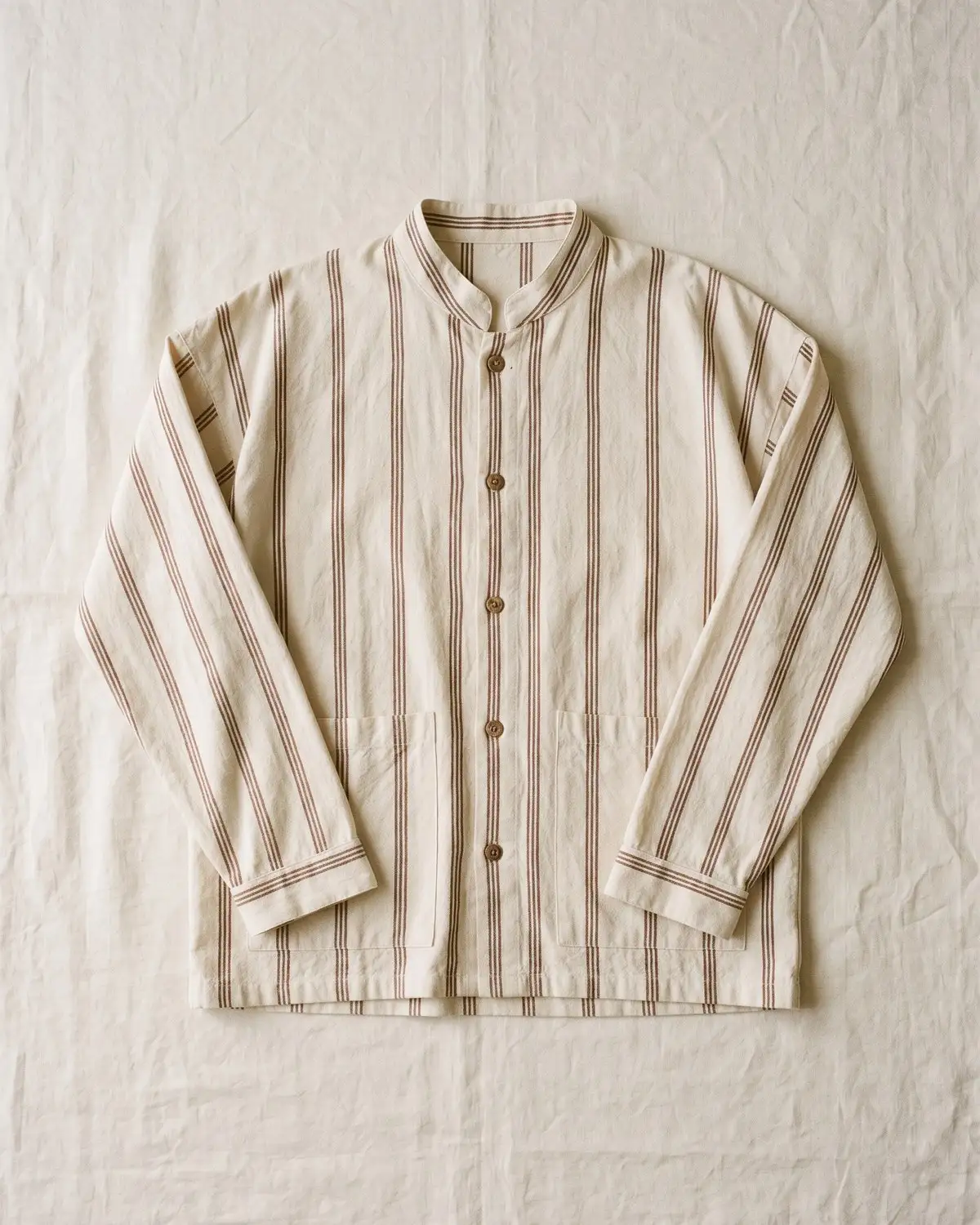
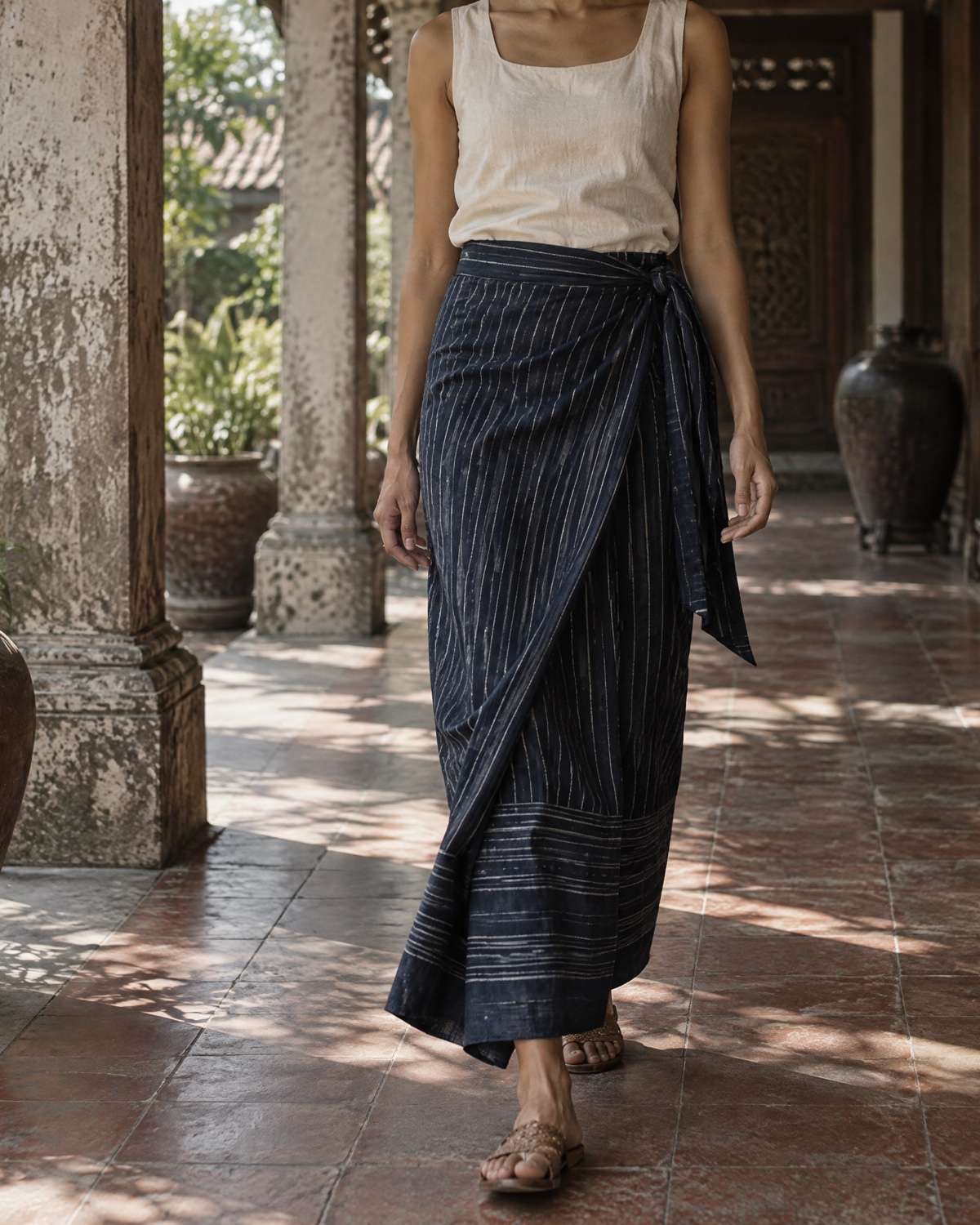
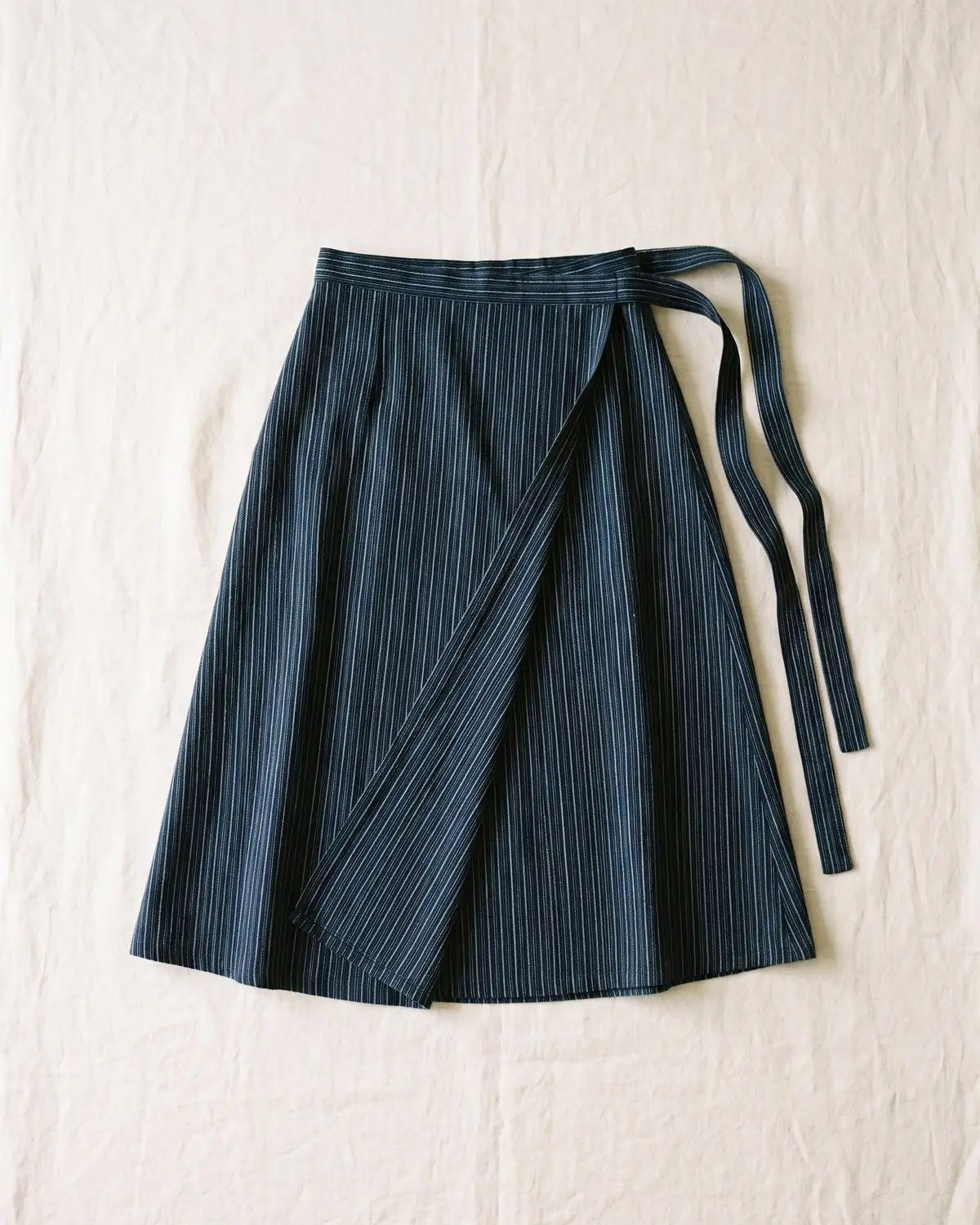
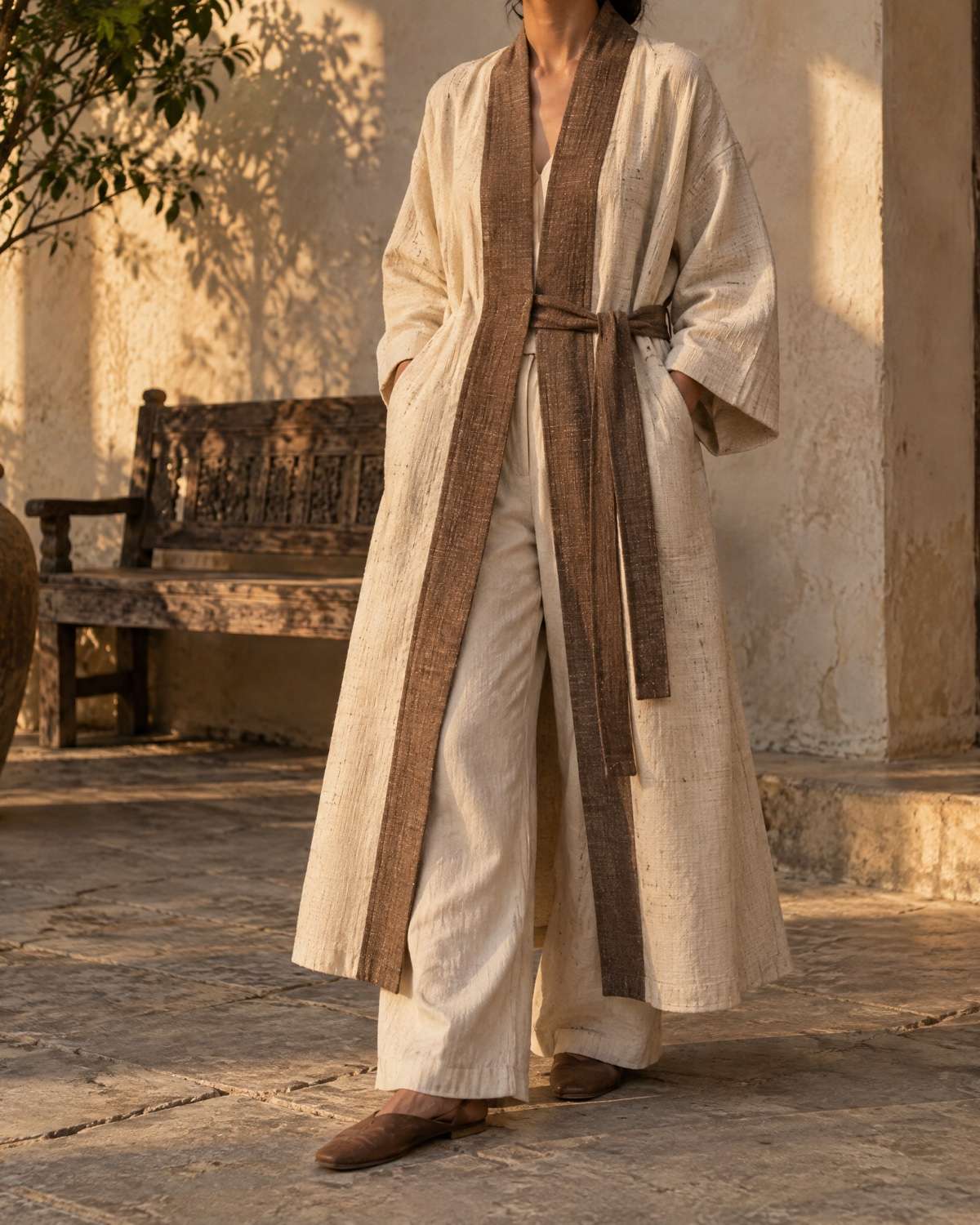
Camp shirts, wide trousers, a robe coat and a wrap skirt — unlined, cut for 32 degrees. All ten pieces
Blue is built, not poured
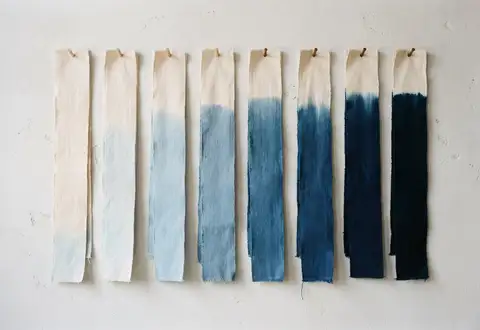
A strip of cotton comes out of the indigo vat green, and turns blue in the air. One dip gives the colour of a morning sky. The deep nila of our wrap skirt takes sixteen, each one left to breathe before the next.
That is why a Soganila piece cannot be rushed, and why no two dye lots match exactly.
Journal
Notes from the dye house and the cutting table.
- 01
Two O’Clock
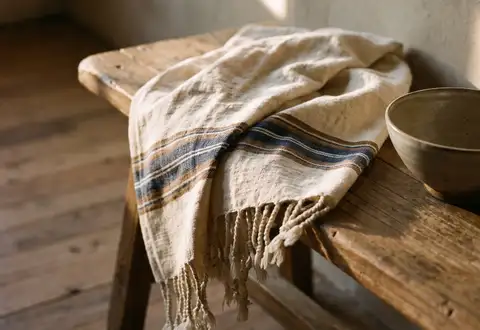
Collection 01 in six still lifes, set between 13:40 and 14:20 — the hour when the shade moves under the eaves.
- 02
Indigo keeps its own calendar
Why one shirt takes twelve dips, and why the vat decides the week, not us.
- 03
Cut for 32 degrees
Four rules for clothes that have to work in the heat of a Javanese afternoon.