

Cut for 32 degrees
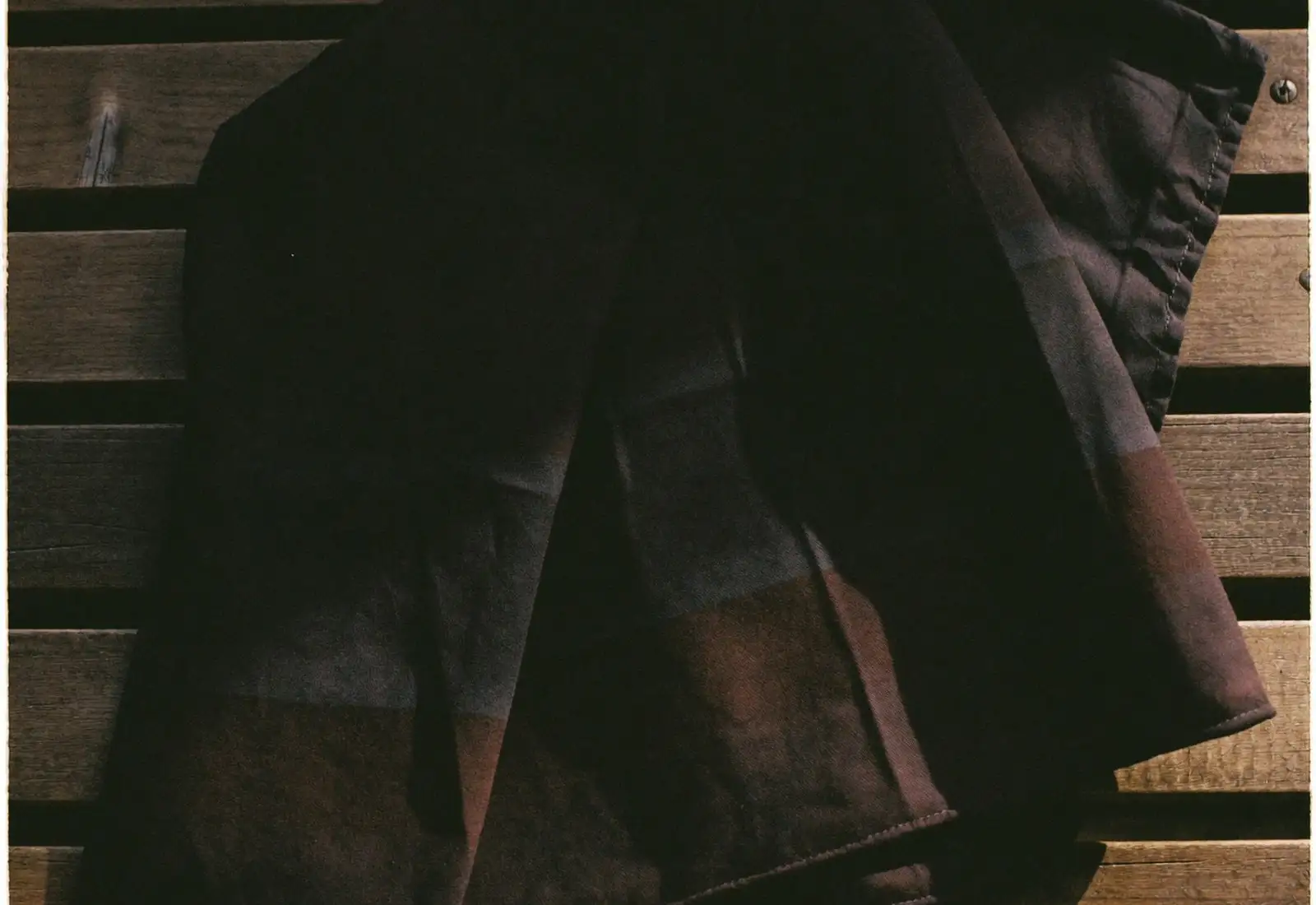
Most tailoring was invented for cold rooms. It locks the body in: a lining, a close fit at the chest, a waistband that holds. At two in the afternoon in Java, that is the opposite of what a body needs. So we started from the heat and worked back to the garment.
- Unlined, always. A lining is a second wall. Every piece is one layer of cloth, finished on the inside so it does not need hiding.
- A hand of air. At the chest, the hip and the thigh we leave a hand’s width between body and cloth. Walking moves the air through.
- Nothing rubs. Flat-felled and bound seams only. Damp skin finds every raw edge.
- Sleeves that stay rolled. Cut long and wide enough to roll twice and hold, without a button tab.
Weight, not thinness
Cool cloth is not the thinnest cloth. A loose, open handloom weave at 150–200 g/m² stands away from the skin and lets air through; a thin, tight cloth clings the moment you sweat. Our heaviest piece, the Gerimis Field Jacket, is still a single layer.
We cut around the slubs we like and keep them.