

Atelier
A house built on two dyes, one loom width and one hour of the day.
Two dyes
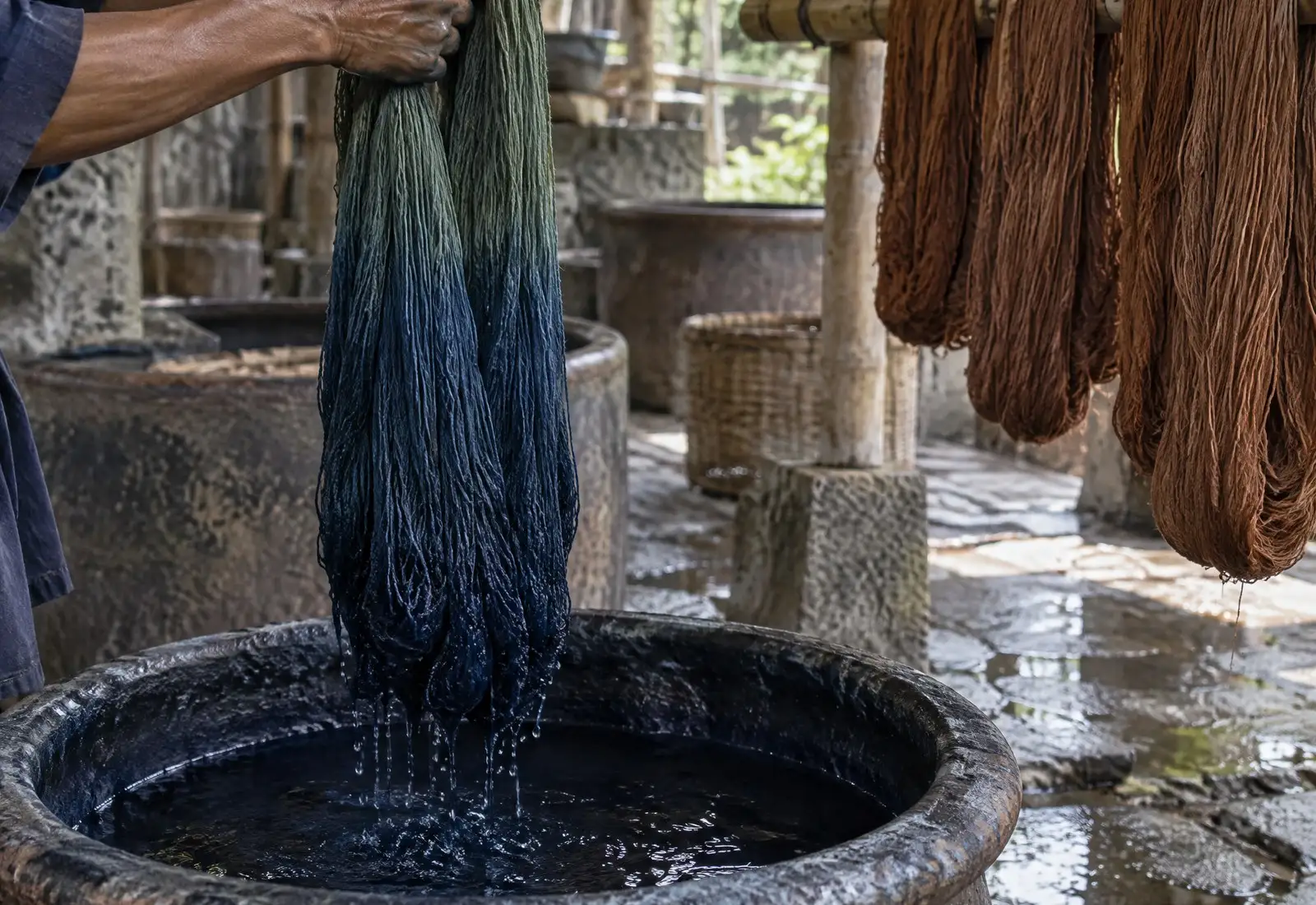
Soga is the brown of Javanese cloth: bark from the soga tree, simmered and laid on cotton again and again across the dry season, until the brown goes deep enough to hold.
Nila is indigo from the tarum leaf, fermented into a living vat. It dyes in dips, not in time: green as it leaves the vat, blue as it meets the air.
Laid one over the other, they make wedel — a brown-black that turns blue at the fold. We use nothing else. No synthetic black, no bleach, no print.
The cloth
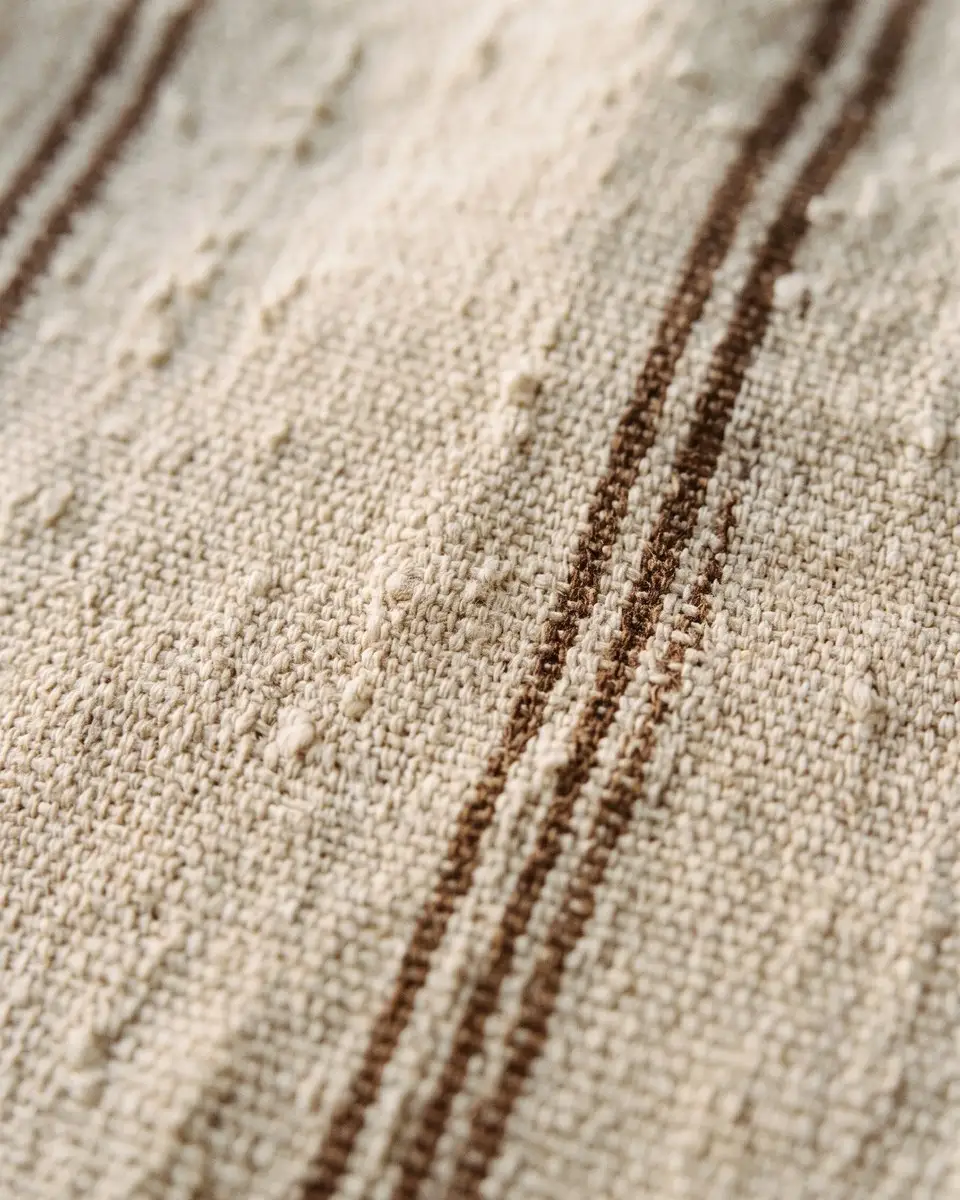
Our cloth is lurik — the striped cotton of Central Java, woven on non-machine looms. The stripes are in the warp, so they are part of the cloth, not printed on it.
Handloom cloth is irregular on purpose. Threads thicken and thin; a stripe wanders by a millimetre. We cut around the irregularities we like and keep them.
The cut
Four rules, written for 32 °C and eighty percent humidity.
Unlined, always
A lining traps a second layer of air against the body. Every Soganila piece is a single layer of cloth.
A hand of air
At the chest, the hip and the thigh, there is a hand’s width between body and cloth. Air moves when you move.
Nothing rubs
Seams are flat-felled or bound, so no raw edge sits against damp skin.
Sleeves that stay rolled
Long sleeves are cut long enough to roll twice and wide enough that the roll holds without a tab.
Dye calendar
The year decides the dye. Soga needs dry-season sun; nila can be dyed all year, but slows in the wet months.
Care
Cold water
Hand wash cold, alone for the first three washes. Natural dyes settle; a little colour in the water is normal.
Shade, not sun
Dry in the shade. Soga and nila fade honestly in strong sun, the way old cloth does.
Let it change
Indigo lightens at the elbows and the knees. Soga warms. That is the cloth recording how it was worn.