

Indigo keeps its own calendar
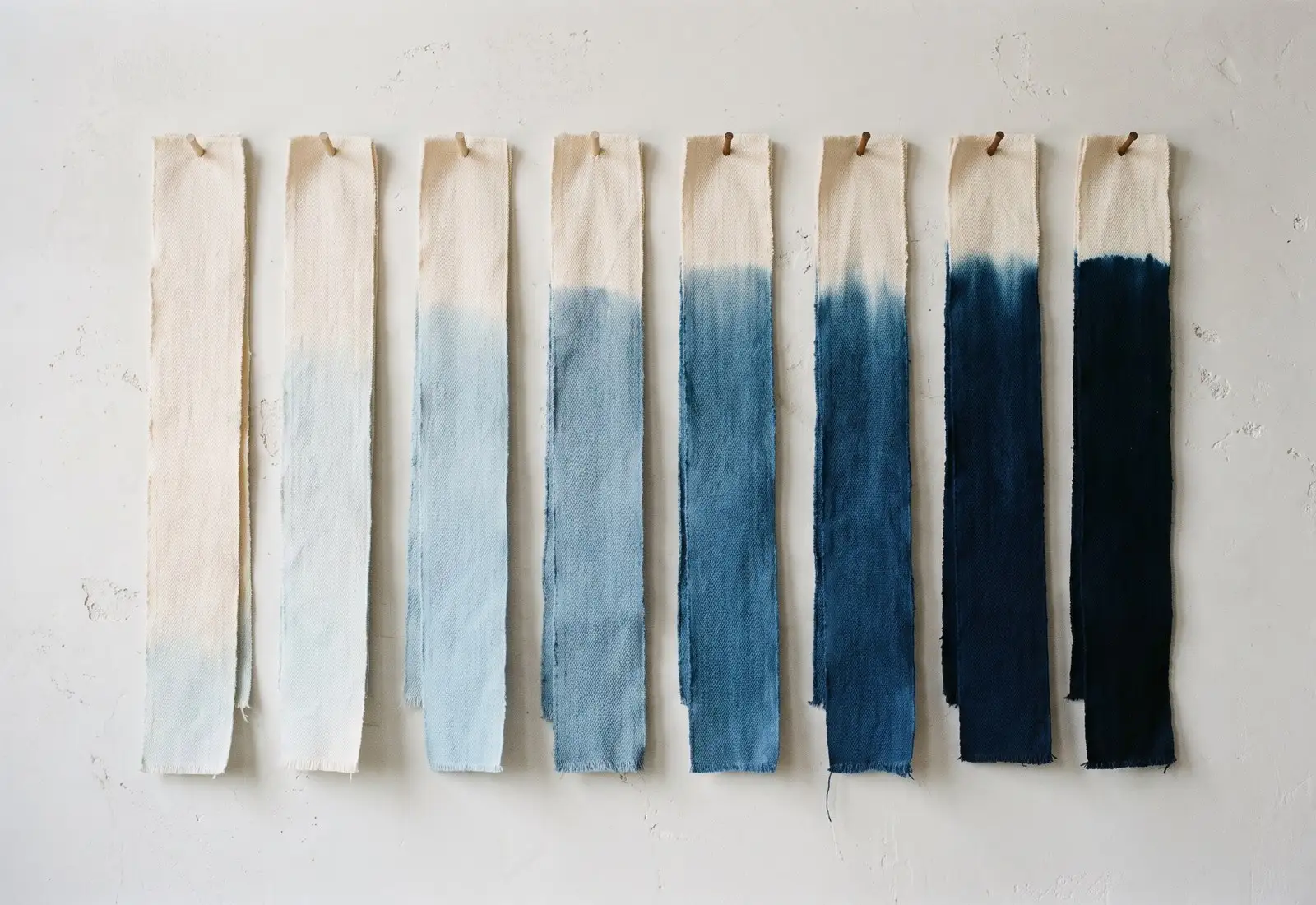
A nila vat is not a pot of colour. It is a living thing: leaves of the tarum plant, fermented with lime and a little sugar until the water turns a coppery green and smells of the earth after rain. The vat has moods. It is quick in the dry months and sulky in the wet ones, and it decides how many dips a day it will give.
Cloth goes in pale and comes out green. In the air, it turns blue in front of you — the oxygen does the work. One dip gives the colour of a morning sky. The second dip goes on top of the first. Depth is built the way a wall is built: in courses, each one left to set before the next.
The deep nila of the Lorek Wrap Skirt is sixteen dips. The pale stripe running through it is four.
Why the week belongs to the vat
If you rush indigo — too many dips in a day, too little air between them — the colour sits on the surface and rubs off on everything you touch. So the vat sets the pace. A shirt’s worth of yarn might take three days in April and a week in January.
That is also why no two dye lots match. A Soganila piece dyed in May will be a fraction greener than one dyed in October. We write the dye month on the care label, so you know which one you have.
What it does after you buy it
Indigo keeps moving. It lightens where the cloth is held and folded — the elbow, the cuff, the knee — and it does so honestly, without the white streaks of a synthetic blue. Wash it cold, dry it in shade, and let it record the way you wear it.